Key takeaways
- Google rolled out AI Overviews and AI Mode in France on 22 July 2026, after a two-year regulatory block. This is the year’s most concrete change, not a hypothesis.
- Zero-click is no longer an exception: 68% of US Google searches ended without a click in early 2026, up from 60% in 2024 (SparkToro).
- Getting cited by a generative AI depends first on verifiable technical criteria: JavaScript rendering, content structure, data present in raw HTML.
- What hasn’t changed: topical coherence, E-E-A-T, clean link building and internal linking remain the foundations, AI in the loop or not.
SEO trends for 2026 boil down to one dated shift and a set of unchanged fundamentals. On 22 July 2026, Google ended a two-year wait by rolling out AI Overviews in France. Everything else in search still runs on what already worked.
Does ChatGPT recommend your brand?Measure your presence and identify the brands cited in your place. No credit card required.
AI Overviews in France: what actually changed since 22 July 2026
Google rolled out AI Overviews and AI Mode in France on 22 July 2026, ending a two-year block. The delay was rooted in a dispute with French press publishers over neighbouring rights, not a technical limitation: the feature was already running in over 120 countries.
Three commitments accompanied the rollout. An opt-out lets publishers refuse to have their content feed AI summaries. Transparency on AI-generated impressions must be provided through Search Console. Compensation under neighbouring rights applies to content reused in generated answers. Opting out protects against reuse, it guarantees no traffic in return.
For a site that already ranked well, the immediate consequence is twofold. A query that used to show ten blue links can now show a generated summary above them, mechanically pushing clicks further down the page. And appearing among the sources cited in that summary becomes a visibility goal in its own right, distinct from classic organic ranking.
In my view, the mistake would be treating this launch as an isolated event to comment on and forget. It is a structural change to the French results page, comparable to the arrival of featured snippets in its time, but with a broader impact on click volume.
Zero-click is no longer the exception, it’s the norm
One in two Google searches, in 2026, ends with no click at all to an external site. In the United States, that rate reaches 68% over the first four months of 2026, up from 60% in 2024, according to a SparkToro study based on Similarweb clickstream data.
This figure is American, not French, and the two markets don’t necessarily follow the same pace of AI feature rollout in results. It still shows the direction: every new feature that answers directly on the results page, generated summary, optimised snippet, knowledge panel, mechanically reduces the share of searches that lead to a visit.
The consequence for a content strategy isn’t abandoning organic SEO, it’s doubling the objective. A page now needs to aim for two outcomes at once: classic ranking for queries that still generate a click, and citation in generated summaries for those that no longer do.
Writing to be cited: the inverted pyramid remains the best tool
Placing the answer at the top of a section, before the development, serves the hurried reader as much as the system extracting a citable passage. This principle isn’t new, it used to be called featured snippet optimisation. It now applies to a broader set of extractive systems.
The structure that works follows a simple logic: the conclusion first, in forty to fifty words, then details, context and supporting information. This hierarchy, inverted compared to a classic essay, aligns the article with how a system extracts an excerpt, line by line, from the start of a section.
- A direct, self-contained answer opening every H2, with no transition sentence
- Tables and lists for any comparable information, more easily extracted than a continuous paragraph
- A closing FAQ covering related questions without repeating the body text
- Short paragraphs, one idea per block, to limit dependence on surrounding context
This approach coexists with in-depth content. The short answer up front doesn’t preclude the analysis that follows, it gives the hurried reader and the extraction system a shared entry point.
Technical rendering: the blind spot of AI visibility
A perfectly structured piece of content stays invisible if the bot meant to extract it cannot read it. Googlebot executes the JavaScript on your pages, most answer engine crawlers do not.
The analysis Vercel ran with MERJ on real crawler traffic is unambiguous: none of the major AI crawlers render JavaScript. GPTBot downloads JavaScript files in roughly 11.5% of its requests without ever executing them, ClaudeBot in nearly 24% of cases with the same outcome. A page can rank number one on Google and remain an empty shell for ChatGPT or Perplexity.
The test takes thirty seconds: view the page source, not the browser inspector, and check that a sentence from the main content is actually there.
Topical coherence: building niche authority rather than stacking keywords
A site organised around a coherent topic ranks more easily on queries tied to that topic than a site covering unrelated subjects at the same frequency. This is a content organisation principle, not a promise of a specific measured result.
The logic rests on Google evaluating sites as much as individual pages. A body of content that methodically covers a domain, from high-ranking-potential subjects down to more peripheral, lower-potential ones, signals recognisable expertise. Covering a subject entirely foreign to that expertise dilutes the signal, even if the article itself is well written.
In my view, the right instinct is to exhaust high-potential subjects directly tied to your core business before branching into adjacent topics. An SEO consultancy that occasionally publishes about sports nutrition strengthens neither positioning.
The same principle applies to link building: an inbound link from a page covering the same subject as yours carries a more coherent signal than a link from an unrelated page, even if the source domain has strong overall authority.
E-E-A-T in 2026: what changed, what stayed stable
The four criteria, Experience, Expertise, Authoritativeness and Trustworthiness, haven’t changed in nature since their formalisation in Google’s quality guidelines. What changed is their relative weight against the flood of automatically generated content.
Content that shows lived experience, a case actually handled, a directly observed data point rather than a rephrased one, becomes easier to tell apart from mass-produced content from a language model. The experience criterion, long the least emphasised of the four, is gaining weight precisely because it is the hardest to fake.
What stays stable:
- Clearly identifying the author of a piece of content, with a dedicated page and verifiable expertise information
- Citing primary sources rather than relays, and dating time-sensitive information
- Documenting direct experience when the subject allows for it, rather than staying at the level of summary
Brand SEO: why recognition is becoming a ranking signal
Google’s Knowledge Graph builds an identity record for each recognised entity, person or organisation, from consistent public signals: name, site, social profiles, press mentions, business listing. A brand identifiable in that graph is more easily tied to its area of expertise than one that only exists through its website.
This logic overlaps directly with E-E-A-T. A site whose author is identifiable, whose business has an up-to-date Google Business Profile, whose professional profiles consistently point back to the same name and expertise, sends a consistency signal Google can verify by cross-referencing rather than by declaration.
In practice, this means standardising name, address and phone number across every directory and profile, correctly filling in Person and Organization structured data, and maintaining a verifiable presence beyond the site itself. This isn’t a trend measured in percentages, it’s a hygiene checked profile by profile.
Link building: what still works, what exposes you to a penalty
A backlink earned naturally, because a third-party site judged your content worth citing, remains the strongest trust signal Google has for evaluating a page. It’s also the hardest to obtain at volume, which pushes part of the market toward shortcuts.
So-called “tier 2” link building, creating links to the sites that already link to you in order to artificially boost their authority, is presented by part of the industry as an advanced tactic. Google Search Central’s spam policies are explicit on this point: any link designed to manipulate PageRank or a site’s ranking falls under a punishable link scheme, whether through excessive exchanges, large-scale coordinated schemes, or an architecture of sites created for that sole purpose.
In my view, building an artificial link pyramid amounts to betting on Google’s detection speed rather than on content quality. Current detection systems analyse shared hosting patterns, anchor text patterns and link acquisition speed across an entire network, not link by link. The risk applies to the whole domain, not just the pages involved.
The alternative that stays durable: digital PR and content worth citing spontaneously, original studies, proprietary data, well-argued positions. It’s slower to produce, and it doesn’t collapse at the next anti-spam update.
Multichannel content: repurposing without diluting your topical authority
Turning an in-depth article into a video, a LinkedIn post or a podcast episode multiplies touchpoints without multiplying the initial research work. This is an editorial efficiency principle more than a measured algorithmic trend.
The topical coherence principle above applies to this repurposing too. An in-depth guide summarised in three minutes on a video platform reinforces the authority already built by the source article, provided it stays on the same subject and links back to the full piece. Repurposing a subject unrelated to your core business just because a format is available dilutes the effort rather than multiplying it.
The priority stays the same as in writing: covering a limited number of subjects in depth rather than a number of formats superficially.
Does ChatGPT recommend your brand?Measure your presence and identify the brands cited in your place. No credit card required.
Disclosure: I am a co-founder of Cockpyt AI. The tool queries ChatGPT, Perplexity, Gemini and Claude weekly on your business queries and reports the brands cited. The manual check described in this article remains possible, it simply takes time.
What never changes: internal linking and technical fundamentals
Internal linking, clean indexing and content that genuinely answers a search intent remain the criteria that determine most rankings, every year, AI in the loop or not. These fundamentals appear in no trends list because they don’t change: they are checked and fixed, independent of the product announcement calendar.
That is why this article is updated every year without changing structure. Dated events follow one another, AI Overviews in France is one, page load speed was another five years ago. The foundations that determine who holds attention once the event is digested don’t move at the same pace.
Frequently asked questions about SEO trends 2026
Will AI Overviews make organic traffic disappear?
No, but it redistributes part of the clicks toward a smaller number of cited sources. Queries with strong transactional intent still generate clicks, purely informational queries more often settle for the displayed summary.
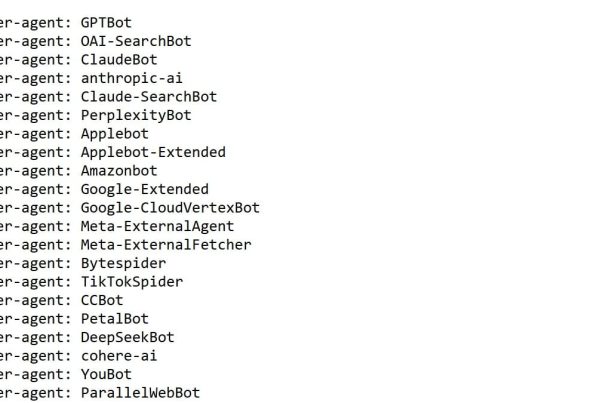
Should you block AI crawlers to protect your content?
The choice depends on your business model. Blocking protects against collection for training, at the cost of any chance of being cited in generated answers. For a consulting or service business, citation is generally worth more than protection.
Is voice search still a standalone trend in 2026?
It has merged into the broader conversational search trend, powered by the same engines that generate AI summaries. The principles that serve it, natural questions, short and direct answers, are the same ones that serve citation by generative AI.
Does tier 2 link building still work in 2026?
It can produce a temporary effect, at the cost of a risk that applies to the entire domain if the scheme is detected. Google’s anti-spam policies explicitly target links designed to manipulate ranking, however sophisticated they appear.
How long before a content structure fix shows an effect?
Organic ranking reacts over several weeks. Appearing among the sources cited by a generated summary can vary more, these systems recalculate their sources more frequently than a classic search index.
Should you bet everything on GEO at the expense of classic SEO?
No, the two share most of their technical and editorial foundations. Well-structured, properly indexed content readable in raw HTML serves both objectives at once, in proportions that vary depending on your target queries.
Florian Zorgnotti, SEO consultant in Nice since 2016.
Sources
- Blog du Modérateur, “Google déploie AI Overviews et AI Mode en France”, 22 July 2026 — confirmation of the official rollout. blogdumoderateur.com
- Search Engine Land, “Google zero-click searches reach 68% in early 2026”, citing a SparkToro study on Similarweb data — zero-click growth in the United States. searchengineland.com
- Vercel & MERJ, “The rise of the AI crawler”, 2024 — analysis of real AI crawler traffic: none render JavaScript. vercel.com
- Google Search Central, “Spam Policies for Google Web Search” — official definition of link schemes and sanctioned manipulative practices. developers.google.com